
In today’s hyper-competitive property market, first impressions happen online, and they happen fast. A potential buyer scrolling through listings will spend mere seconds deciding whether a property is worth a closer look. That’s exactly why visual quality has become non-negotiable for anyone serious about selling real estate. At the center of this visual revolution sit the Real Estate HDR Photo Editing Trends that are reshaping how properties are presented, marketed, and ultimately sold.
HDR (High Dynamic Range) photography and editing aren’t new, but the way professionals are applying it to real estate has evolved dramatically. From AI-enhanced blending to sky replacements and twilight simulations, the editing techniques used today are smarter, faster, and more visually compelling than ever before. Whether you’re a photographer, a real estate agent, or a property developer, staying current with these developments isn’t optional- it’s a competitive advantage.
What Is HDR Editing and Why Does It Matter in Real Estate?
HDR editing involves merging multiple exposures of the same image- typically a dark, medium, and bright version- to produce one photograph that captures detail in both the brightest highlights and the darkest shadows. In real estate, this is critical. A standard single-exposure photo of a living room, for instance, will either blow out the window view or leave the interior looking dark and uninviting. HDR editing solves that problem elegantly.
For real estate professionals, this translates directly into listings that look polished, inviting, and accurate. Buyers trust what they see. When images show a bright, well-lit interior with a clear outdoor view through the windows, it builds confidence and drives more inquiries. Poor photography, on the other hand, can make a genuinely beautiful property look mediocre.
Top Real Estate HDR Photo Editing Trends Shaping the Industry
1. AI-Powered HDR Blending
Artificial intelligence has transformed how multiple exposures are merged. Traditional HDR merging often produced ghosting effects or unnatural halos, especially around windows or moving elements like curtains. Today’s AI-driven tools – integrated into platforms like Lightroom, Aurora HDR, and Photomatix – intelligently detect and eliminate these artifacts automatically.
The result is a cleaner, more natural-looking image that doesn’t scream “heavily edited.” This matters enormously in real estate, where authenticity is key. Buyers want to feel confident that what they’re seeing online matches what they’ll experience in person. AI blending makes that possible without sacrificing visual quality.
2. Sky Replacement and Exterior Enhancement
One of the most dramatic and increasingly mainstream techniques in Real Estate HDR Photo Editing is sky replacement. A flat, overcast sky can make even the most beautiful home exterior look dull. Modern editing tools now allow photographers to seamlessly swap out dull skies for vibrant blue ones, dramatic sunsets, or even golden-hour tones.
What was once a painstaking manual process has become a near-automatic feature in tools like Adobe Photoshop’s Sky Replacement and Luminar AI. Importantly, professionals are applying this alongside HDR techniques to ensure exterior images look consistent, natural, and appealing- regardless of what the weather was doing on shoot day.
3. Twilight and Virtual Dusk Simulations
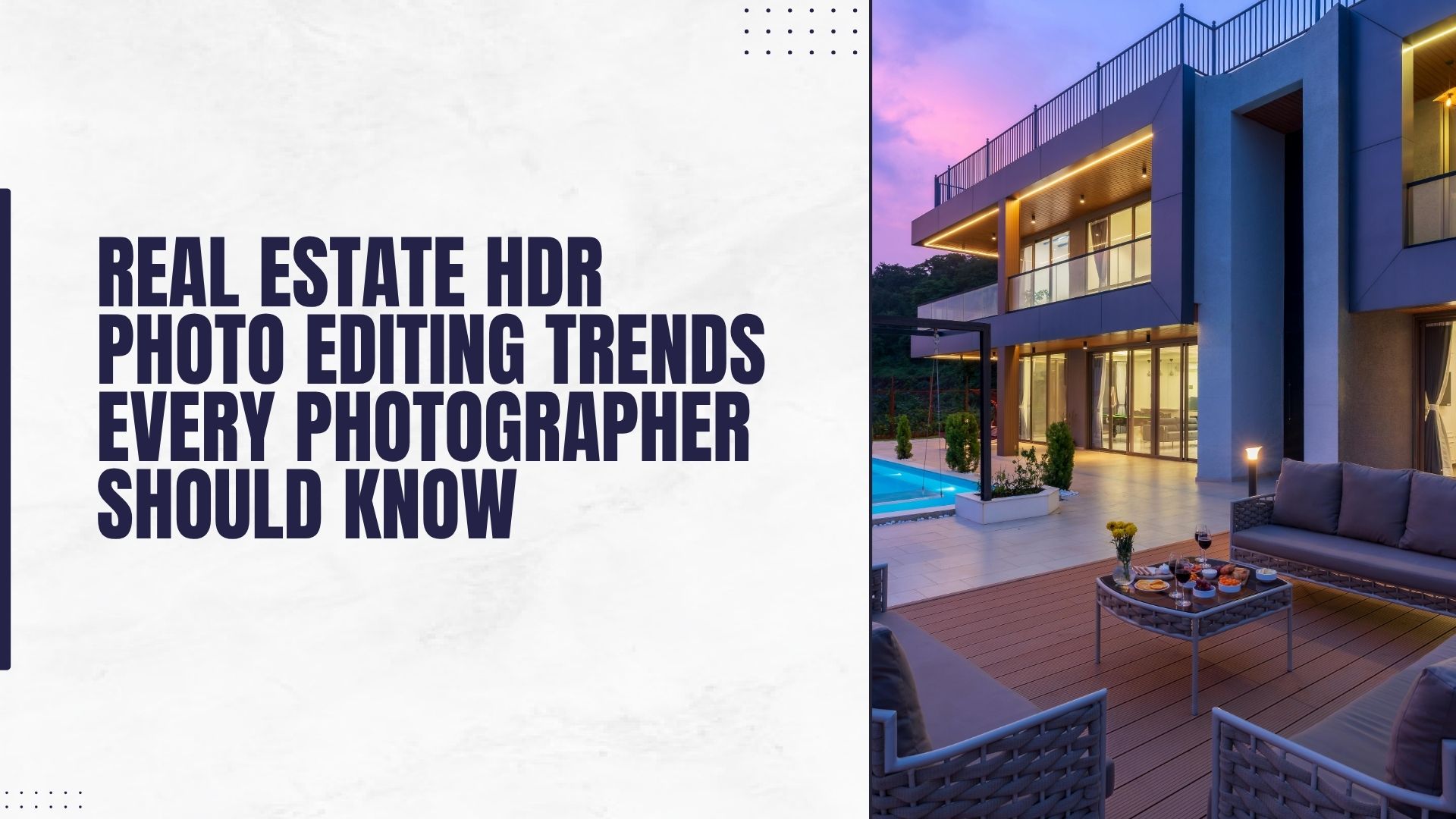
Twilight photography – where exterior shots are taken at dusk with interior lights glowing warmly – has long been considered the gold standard of luxury real estate imagery. The challenge is that scheduling shoots at exactly the right time is logistically complex and weather-dependent. That’s where virtual twilight editing has become a game-changer.
Skilled editors can now transform a standard daytime exterior HDR shot into a stunning twilight scene in post-production. Interior lights are added digitally, sky tones are shifted to deep blues and purples, and the overall ambiance is elevated significantly. For high-end listings, this technique is no longer a luxury – it’s an expectation.
Read Also- Real Estate HDR Editing Tutorial – A Complete Guide
4. Window Masking and View Enhancement
One of the persistent challenges in interior real estate photography is managing window exposure. Even with HDR blending, windows can sometimes appear washed out or fail to showcase the view beyond. Window masking – where the exterior view is separately captured and composited into the interior image – has become a refined art in modern Real Estate HDR Photo Editing.
Photographers now routinely capture a dedicated window exposure during the shoot, which editors then blend in seamlessly during post-processing. The result is an interior image where every detail pops from the texture of the hardwood floor to the garden or cityscape visible through the glass.
5. Color Grading for Emotional Impact
Beyond technical corrections, sophisticated color grading has entered the real estate editing workflow. Rather than simply correcting white balance and exposure, editors are now applying deliberate color tones to evoke specific emotional responses. Warm, inviting tones for family homes. Cooler, contemporary palettes for modern apartments. Rich, saturated greens for properties with lush landscapes.
This trend borrows heavily from cinematic and commercial photography, and it’s proving highly effective. Color grading as part of HDR processing gives listings a cohesive visual identity that makes them stand out on platforms like Zillow, Realtor.com, and social media channels.
6. Virtual Staging Combined with HDR Editing
Vacant properties are notoriously difficult to photograph compellingly. Without furniture, rooms feel cold and difficult to scale. Virtual staging – the digital addition of furniture, décor, and lifestyle elements – has merged powerfully with HDR editing workflows.
A well-executed HDR base image provides the perfect canvas for virtual staging. The lighting is balanced, the colors are accurate, and the detail is rich – making it far easier for digital artists to add realistic-looking furniture that blends seamlessly into the scene. Many real estate photography studios and Real Estate HDR Photo Editing Services providers now offer virtual staging as a bundled service.
Read Also- Real Estate HDR Photo Editing vs Traditional Photo Editing: Which Is Better?
Why Working with a Real Estate HDR Photo Editing Company Makes Sense
For agents, developers, and property managers handling multiple listings simultaneously, in-house editing simply isn’t scalable. Partnering with a dedicated Real Estate HDR Photo Editing Company offers several compelling advantages. These specialized teams understand the nuances of property photography- from managing mixed lighting conditions to enhancing architectural features without distorting perspective.
Turnaround time is another critical factor. In a fast-moving market, waiting days for edited images can mean missed opportunities. Professional editing companies typically offer 24 to 48-hour delivery windows, ensuring your listings go live quickly. Consistency is equally important- a reliable editing partner maintains a uniform look across all your property images, which strengthens your brand as an agent or developer.
Cost is often cited as a concern, but when weighed against the potential uplift in sales price or reduction in days on market, professional HDR editing delivers a strong return on investment. Properties with professionally edited photos consistently outperform those with basic imagery – and that gap is only widening as buyer expectations rise.
Emerging Real Estate HDR Photo Editing Trends to Watch
Looking ahead, several developing technologies are poised to further reshape how real estate images are created and edited.
- AI-Based Automatic Culling and Editing: Platforms are beginning to offer fully automated workflows where AI selects the best frames, performs initial HDR blending, and applies pre-set color grades – with minimal human intervention required.
- 360-Degree HDR Photography: Virtual tours have surged in popularity post-pandemic. HDR techniques are now being applied to 360-degree imagery, ensuring that every angle of an immersive virtual tour looks as polished as a traditional still image.
- Drone HDR Photography: Aerial photography combined with HDR editing is becoming standard for larger residential properties, commercial listings, and land parcels. The combination of dramatic perspectives and balanced HDR lighting produces highly shareable marketing content.
- Consistent Multi-Platform Optimization: Edited images now need to perform across different platforms – MLS listings, Instagram, print brochures, and website hero images – each with different technical requirements. Future editing workflows will increasingly optimize exports automatically for each channel.
Conclusion
The property market has never been more visual, and the standards buyers expect have never been higher. Staying current with Real Estate HDR Photo Editing Trends isn’t just about keeping up with technology – it’s about understanding what moves buyers emotionally, builds trust instantly, and communicates the true value of a property in a single glance.
Whether you’re a solo real estate photographer refining your craft, an agent looking to elevate your listing quality, or a developer managing a large portfolio of properties, embracing modern HDR editing practices – and working with the right professionals to execute them – will make a measurable difference in your results.
The best real estate images don’t just show a property. They tell a story, spark a feeling, and invite a buyer to imagine their life within those walls. That’s the true power of excellent HDR editing – and it’s a power every real estate professional should be leveraging today.
Frequently Asked Questions (FAQs)
Q1. What is Real Estate HDR Photo Editing?
It’s the process of merging multiple exposures into one balanced image that shows clear details in both bright and dark areas of a property photo.
Q2. Why do real estate photos need HDR editing?
Standard cameras can’t capture bright windows and dark interiors simultaneously. HDR editing fixes this, making every room look natural, bright, and inviting.
Q3. How long does HDR editing take?
Most professional editors deliver real estate HDR photos within 24–48 hours, with rush options available for urgent listings.
Q4. Is HDR editing worth the cost?
Absolutely. Professionally edited HDR photos attract more buyers, generate more inquiries, and can directly contribute to faster sales at better prices.
Q5. Can HDR editing fix bad real estate photos?
HDR editing enhances well-shot bracketed exposures but can’t fully rescue poorly composed or out-of-focus images. Good photography and good editing work best together.