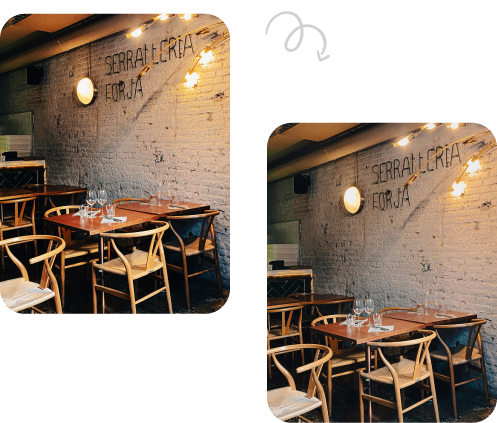

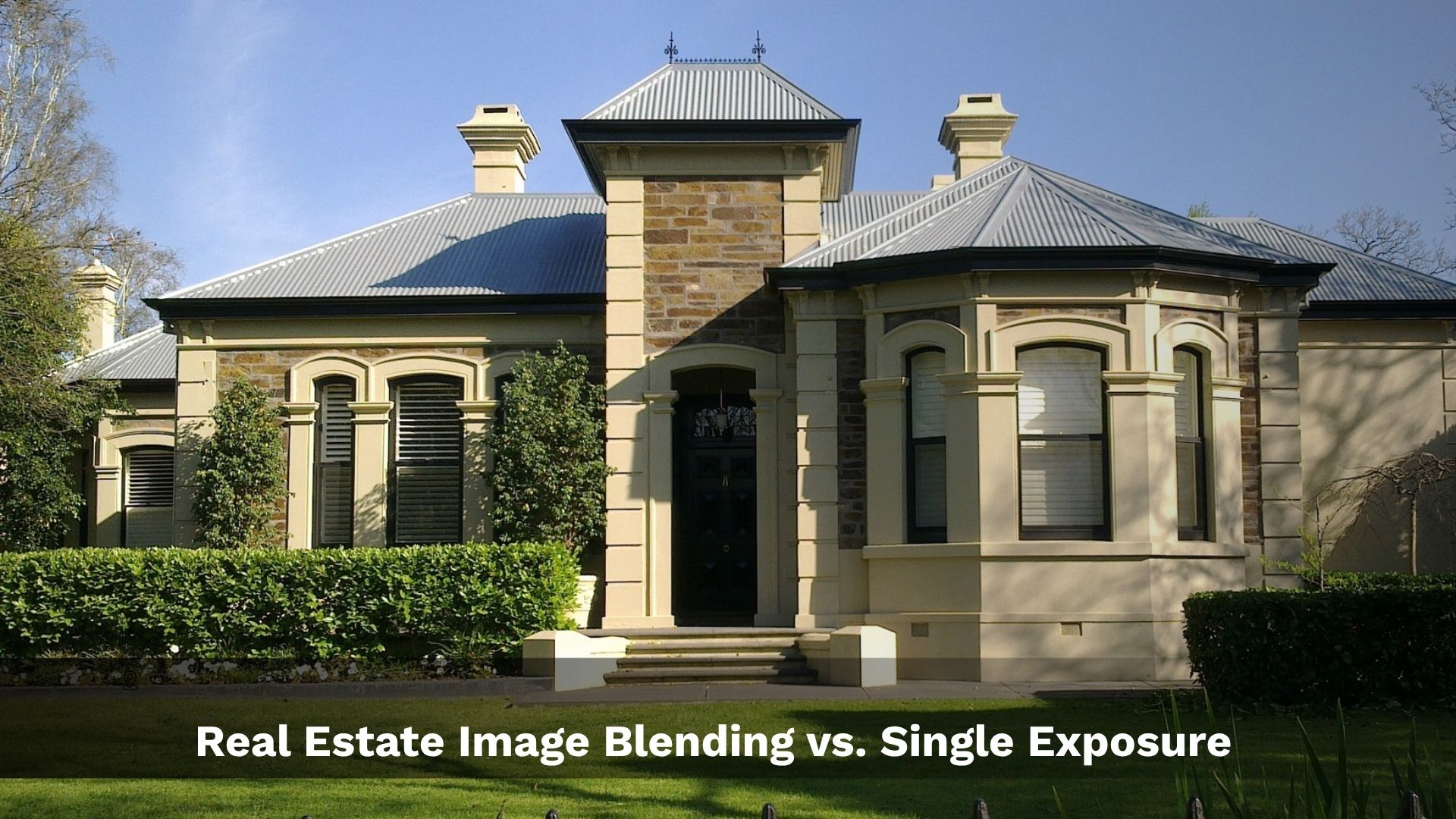
Anyone scrolling through property listings today notices something: the photos either look flat and ordinary, or they glow with balanced light and rich detail. That difference usually comes down to one decision – Real Estate Image Blending vs. Single Exposure – and it shapes how buyers perceive a property before they ever step through the door.
For agents, developers, and colonizers competing in a crowded market, image quality isn’t a cosmetic afterthought anymore. It’s a conversion tool. Understanding how these two photography approaches differ can help you decide which one actually earns clicks, calls, and closings.
What is Image Blending?
Real Estate Image blending is a post-production technique where photographers capture multiple exposures of the same scene – typically ranging from underexposed to overexposed – and merge them into one balanced photograph. Instead of relying on a single shutter click to capture everything, the camera takes several shots at different exposure levels. One frame might capture the bright sky through a window, another the shadowed corners of a room, and a third the mid-tones in between.
Editors then blend these frames using software like Photoshop or Lightroom, selectively pulling the best-exposed parts from each shot. The result is a photo where windows show blue sky instead of blown-out white, interiors look naturally lit, and no detail gets lost to darkness or glare.
Real Estate Image Blending vs. Single Exposure: What Sets Them Apart
Single exposure photography, on the other hand, captures a scene in one frame using one set of camera settings. It’s faster, requires less editing, and has been the industry standard for decades. But it comes with a well-known limitation: cameras struggle to capture both bright and dark areas accurately in a single shot.
This is where the real distinction in Real Estate Image Blending vs. Single Exposure becomes obvious. A single exposure photo of a sunlit living room often forces a trade-off – either the room looks properly lit and the windows appear washed out, or the windows show detail while the interior falls into shadow. Blending eliminates that compromise entirely.
Technical Differences Worth Knowing
- Dynamic range: Blending captures a wider range of light and shadow detail; single exposure is limited by the camera sensor’s natural range.
- Editing time: Blended images require more post-production work, since multiple frames must be aligned and merged manually.
- Consistency: Blended photos look uniformly balanced across an entire listing, while single exposure results can vary room to room.
- Equipment demands: Blending typically needs a tripod and bracketed exposures; single exposure works with a handheld camera.
Why Buyers Respond Differently to Each Style
Home buyers form opinions within seconds of viewing a listing photo. Research on online listing behavior consistently shows that clear, well-lit images increase time spent on a listing and improve inquiry rates. Blended images tend to look more polished, inviting, and trustworthy at first glance.
Single exposure shots aren’t necessarily bad – a well-lit room photographed with good natural light can still look appealing. But in tricky lighting conditions, like a room with large windows or mixed indoor-outdoor light, single exposure often falls short compared to a blended alternative.
Where Single Exposure Still Makes Sense
Not every property needs the extra effort of blending. Single exposure remains practical for quick turnarounds, rental listings with tight budgets, or spaces with even, controlled lighting where dynamic range isn’t a major concern.
- Budget-friendly listings needing fast turnaround
- Interior spaces with soft, diffused natural light
- Rental properties where volume matters more than polish
- Quick social media updates or informal listing previews
Real Estate Image Blending vs. Single Exposure: Which Wins for Listings?
For high-value properties, luxury homes, or new developments where first impressions carry serious weight, blending usually wins. It presents rooms exactly as they’d appear to the human eye – balanced, warm, and detailed – without harsh shadows or blown-out windows distracting from the space.
Developers and colonizers marketing large residential projects often lean toward blended photography for brochures, websites, and property portals, since these images need to hold up across multiple platforms and print formats without losing visual quality.
Side-by-Side Comparison Table
| Factor | Image Blending | Single Exposure |
|---|---|---|
| Lighting balance | Even, natural-looking throughout | Can be inconsistent in mixed light |
| Editing time | Longer, more detailed process | Quick and straightforward |
| Cost | Slightly higher due to labor | More budget-friendly |
| Best for | Luxury homes, developments, MLS listings | Rentals, quick listings, informal use |
| Visual impact | Polished and professional | Functional but sometimes flat |
How Professionals Approach the Process
Photographers who specialize in property marketing usually shoot three to five bracketed exposures per angle, then blend them carefully to avoid an artificial or over-processed look. The goal isn’t to make a room look unrealistic – it’s to represent it accurately, just better than a single frame can manage.
Many agencies now offer real estate image blending services specifically because listings with professionally balanced photography tend to attract more attention on property portals and social media compared to unedited, single-shot images.
Choosing What’s Right for Your Listings
The decision often comes down to property value, timeline, and budget. High-end listings benefit from the extra polish blending provides, while high-volume rental portfolios may prioritize speed with single exposure shots instead.
- Ask whether the property has challenging light conditions (large windows, mixed lighting)
- Consider the platform where images will appear most frequently
- Factor in turnaround time versus visual quality needs
- Evaluate your budget against expected buyer engagement
Conclusion
When it comes down to Real Estate Image Blending vs. Single Exposure, there’s no universally “correct” choice — only the right choice for a specific property and purpose. Blending delivers richer, more balanced imagery ideal for premium listings, while single exposure remains a fast, cost-effective option for simpler needs.
What matters most is intention. Agents, developers, and property dealers who understand these differences can match the right technique to each listing, ensuring photos do justice to the property and to the buyer’s first impression.
Frequently Asked Questions
1. Is image blending the same as HDR photography?
They’re closely related. HDR often refers to automated in-camera processing, while blending typically involves manual, more precise editing across multiple exposures for a natural result.
2. Does image blending make photos look fake?
Not when done correctly. Skilled editors blend exposures subtly, aiming for realistic lighting rather than an exaggerated, artificial appearance.
3. How many exposures are typically used for blending?
Most professional real estate photographers use three to five bracketed shots per angle, though some scenes with extreme lighting contrast may require more.
4. Is single exposure photography still relevant today?
Yes, especially for quick listings, rentals, or spaces with even lighting where the added editing time isn’t necessary or cost-effective.
5. Should developers invest in professional blending services?
For large projects or premium developments, yes. Polished, well-lit imagery helps listings stand out and builds buyer confidence from the very first impression.